Capability Pillar
Software
SDI builds custom software ecosystems spanning web, mobile, cloud, AI, IoT, embedded systems, and connected products. From standalone software platforms to software that powers physical products, we engineer the applications and infrastructure that connect users, devices, data, and intelligent systems.
Program depth
Custom Software for Digital and Connected Products
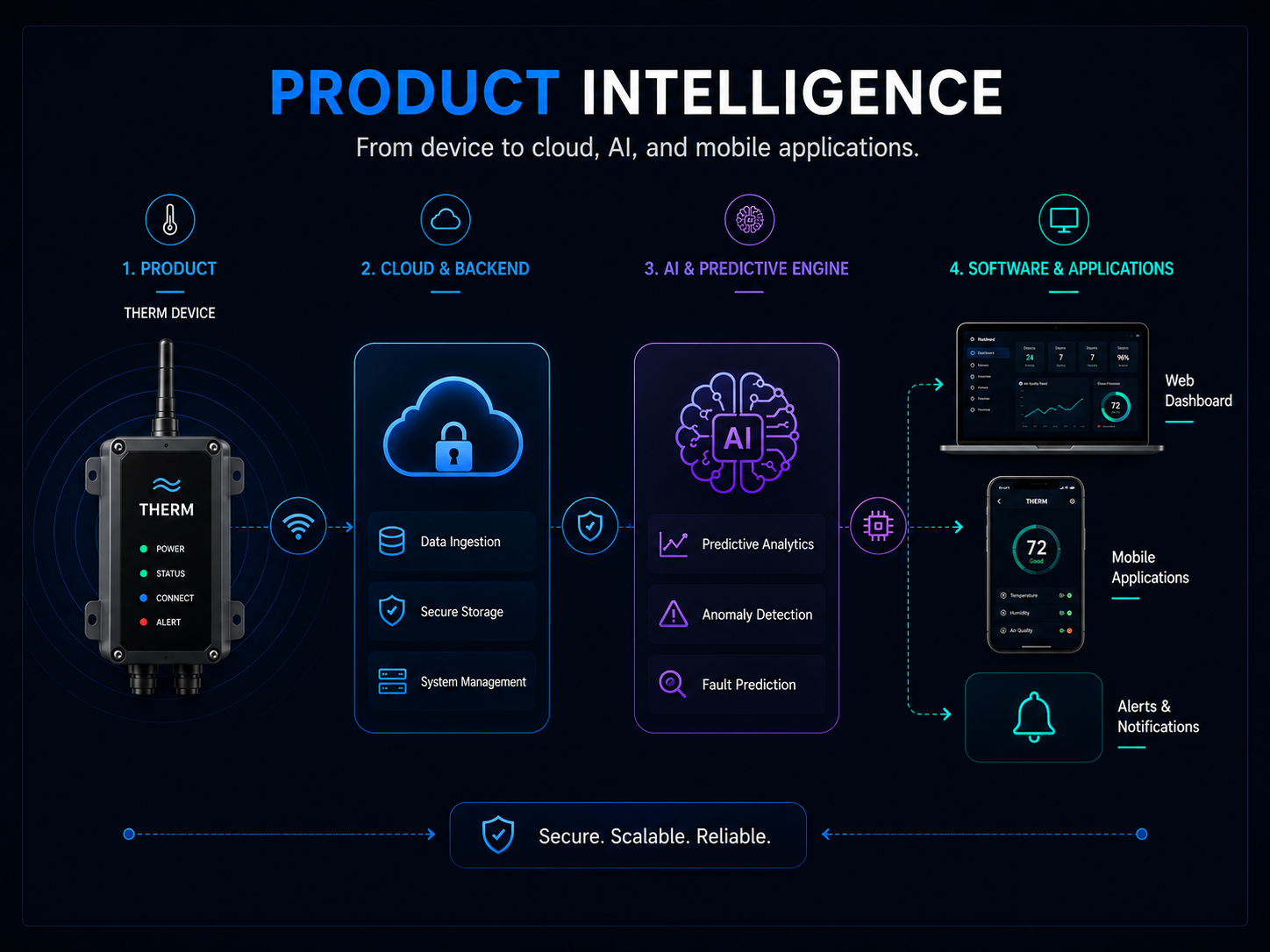
SDI develops custom software for web, mobile, desktop, cloud, AI, IoT, and connected products. Our software teams build applications, platforms, APIs, data systems, and cloud infrastructure that work together as one integrated ecosystem.
For products that combine hardware and software, we connect applications with firmware, sensors, devices, robotics, and intelligent systems. From initial architecture through development, deployment, and ongoing support, SDI engineers software for performance, security, scalability, and real-world use.
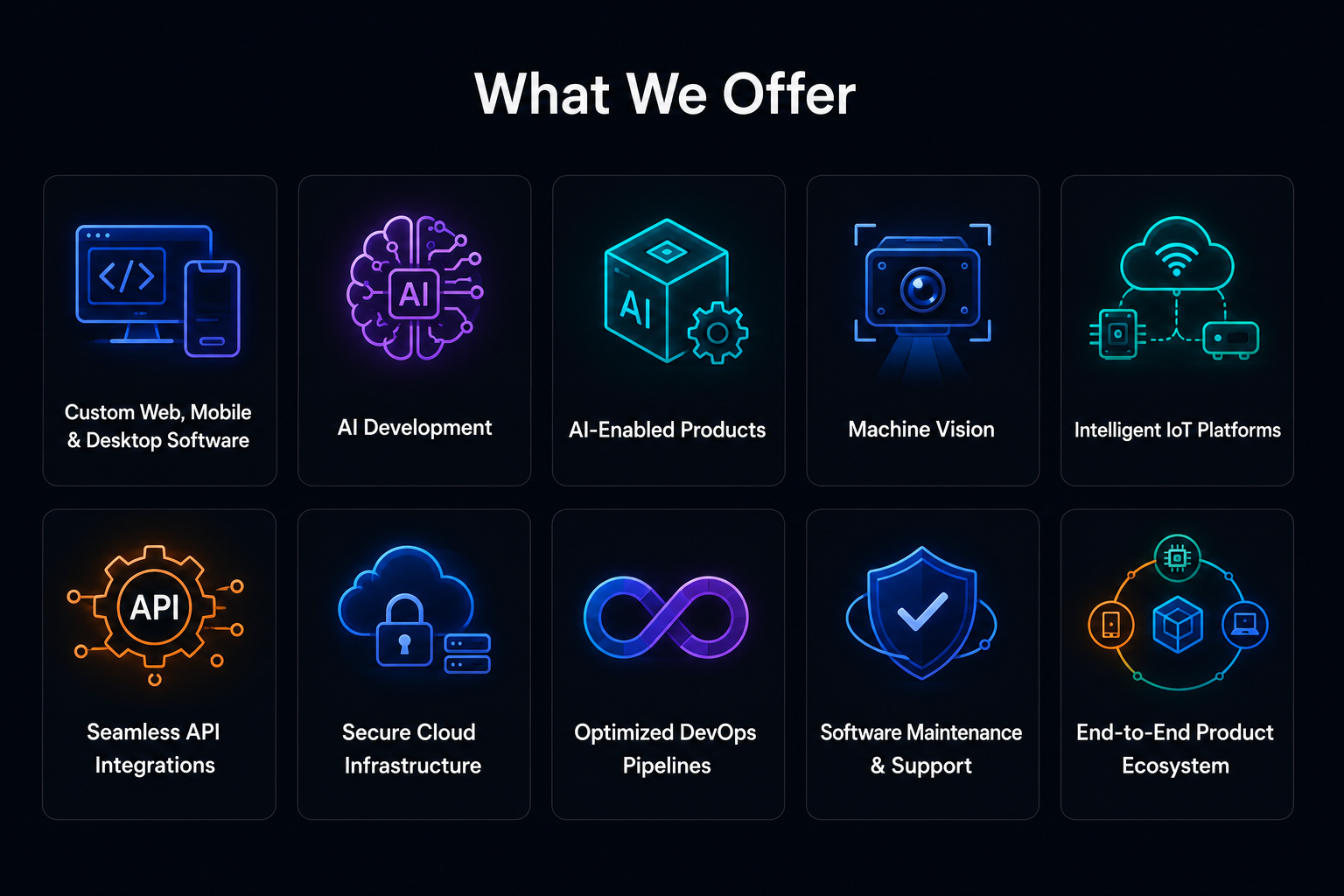
Our Software Capabilities
Software engineering across AI, applications, embedded systems, cloud, IoT, and industrial platforms.
- AI EngineeringLearn more
SDI develops AI solutions that make connected products smarter, faster, and more valuable.
- Custom Software & FirmwareLearn more
SDI develops custom software, backend systems, APIs, cloud platforms, and embedded firmware that work together as one connected ecosystem.
- Web & Mobile ProgrammingLearn more
SDI develops secure, scalable web and mobile applications that work seamlessly with connected products, IoT devices, robotics, and enterprise systems.
- SCADA & UMCLearn more
SDI develops SCADA systems and Unified Monitoring Centers that centralize operational data, improve decision making, and simplify industrial automation.
- Cloud & Backend EngineeringLearn more
SDI develops scalable cloud infrastructure, backend systems, APIs, databases, and integrations that power modern applications and connected products.
- IoT & Connected SoftwareLearn more
SDI develops IoT software that connects devices, sensors, cloud platforms, applications, and data into intelligent product ecosystems.
Frequently asked questions
What types of custom software does SDI develop?
SDI develops web and mobile applications, cloud platforms, backend systems, APIs, AI-powered software, IoT platforms, embedded software, firmware, SCADA systems, and software for connected products.
Can SDI build both web and mobile applications?
Our teams develop web and mobile applications as standalone products or as part of larger technology ecosystems involving cloud infrastructure, enterprise systems, IoT devices, robotics, and connected hardware.
Can SDI develop software for IoT and connected products?
SDI connects devices, sensors, cloud platforms, applications, and data into integrated IoT ecosystems. This can include device communication, dashboards, mobile applications, remote monitoring, alerts, APIs, and automated workflows.
Can SDI develop both software and firmware for a product?
Software and firmware can be developed as part of the same engineering program. This allows SDI to coordinate how embedded hardware, device firmware, cloud infrastructure, APIs, and user-facing applications communicate with one another.
Does SDI develop cloud platforms, backend systems, and APIs?
Cloud and backend engineering is part of SDI's software capabilities. We develop APIs, databases, backend services, integrations, and cloud infrastructure that support applications, connected products, IoT platforms, and enterprise systems.
Can SDI integrate AI into an existing software platform?
AI can be integrated into existing applications and workflows without rebuilding the entire platform. Depending on the use case, SDI can add automation, intelligent search, document processing, data analysis, computer vision, recommendations, or AI-driven workflows.
Can SDI integrate new software with our existing systems?
In many cases, new software can be integrated with existing applications, databases, APIs, cloud services, enterprise platforms, and third-party systems. SDI evaluates the existing architecture and determines the appropriate integration approach.
Can SDI modernize or take over an existing software product?
SDI can evaluate an existing application or codebase and continue development, modernize the architecture, add new features, improve performance, build integrations, or migrate components to newer technologies and cloud environments.
Does SDI provide ongoing software maintenance and support?
Software often requires continued development after launch. SDI can support updates, new features, performance improvements, security enhancements, integrations, monitoring, bug fixes, and ongoing technical maintenance based on the product's needs.
How do we start a custom software development project with SDI?
Start by sharing what you want to build or improve, along with any existing requirements, software, designs, documentation, or technical constraints. SDI can review the project, identify the required technologies and engineering resources, and define the appropriate scope and development approach.